
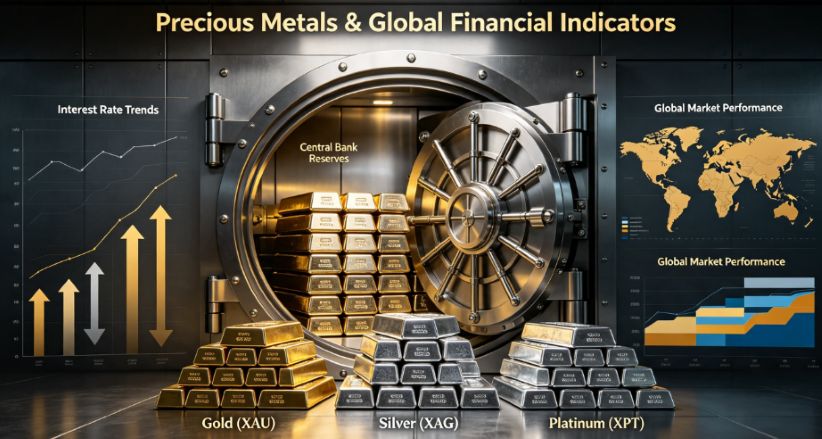
Gold continues to trade close to record territory in mid-July 2026, while silver and platinum are following different paths as investors weigh monetary policy, industrial demand, and geopolitical uncertainty. Market data from LBMA, CME Group, and major commodities exchanges shows that precious metals remain highly sensitive to central bank decisions, currency movements, and global supply risks.
Understand why gold holds near all-time highs, silver faces industrial pressure, and what catalysts will drive prices next. Mid-July market pricing reflects resilient demand for gold, softer sentiment toward silver because of manufacturing concerns, and gradual stabilization in platinum after supply disruptions. Research from the World Gold Council suggests institutional investors continue viewing gold as an effective portfolio diversifier during periods of economic uncertainty.
Mid-July 2026 Price Snapshot
Gold remains supported near historic highs after an extended period of central bank accumulation and cautious investor positioning. Silver has struggled to match gold’s momentum because weaker industrial activity has weighed on expectations for manufacturing demand. Platinum has shown moderate strength as supply concerns from Southern Africa continue to offset uneven automotive demand. Reports from the London Bullion Market Association indicate trading volumes remain elevated across precious metals as investors adjust portfolios ahead of key economic releases.
Central Banks Continue to Build Gold Reserves
Central bank purchases remain one of the strongest long-term supports for gold prices. Findings from the World Gold Council show that many monetary authorities have expanded gold reserves over the past several years as part of broader reserve diversification strategies. Emerging market central banks continue reducing dependence on individual reserve currencies while strengthening financial resilience through greater bullion holdings. Experts note this structural demand differs from short-term speculative buying because official sector purchases are generally intended for long-term reserve management.
Interest Rates and Currency Markets Remain the Main Driver
Interest rate expectations continue shaping precious metal performance more than any other macroeconomic factor. Signals from the U.S. Federal Reserve, European Central Bank, and other major central banks influence government bond yields and currency values, which directly affect gold’s relative attractiveness. Data indicates that expectations for slower policy easing have limited additional upside, while any signs of renewed rate cuts could provide fresh support for bullion prices. A weaker U.S. dollar would likely strengthen demand further, whereas higher real yields could temporarily pressure prices.
Geopolitical and Energy Risks Support Safe-Haven Demand
Ongoing geopolitical tensions and uncertainty across global energy markets continue encouraging defensive investment strategies. Studies published by the International Energy Agency highlight persistent concerns over energy supply security and price volatility. Combined with regional conflicts and trade disruptions, these risks have reinforced demand for traditional safe-haven assets. Investors remain alert to any escalation that could disrupt commodity flows or increase inflation expectations.
Silver’s Dual Role Creates a Different Outlook
Silver occupies a unique position because it serves both as a precious metal and an industrial input. Reports from the Silver Institute show demand from solar panels, electronics, and electrification projects remains structurally strong over the long term. At the same time, slower factory activity has moderated near-term consumption. Supply growth has remained constrained in several producing regions, creating conditions that could tighten the market if industrial demand improves during the second half of the year.
Key Events to Watch Over the Next 90 Days
Several developments could determine the direction of precious metals through the next quarter. Investors will closely monitor inflation reports, central bank policy meetings, labor market data, currency movements, and updates on global energy markets. Continued official-sector buying could provide lasting support for gold, while stronger manufacturing activity may improve silver’s outlook. Market participants should also watch geopolitical developments carefully, as sudden shifts in global risk sentiment could quickly influence both investor demand and price volatility across the precious metals sector.


