
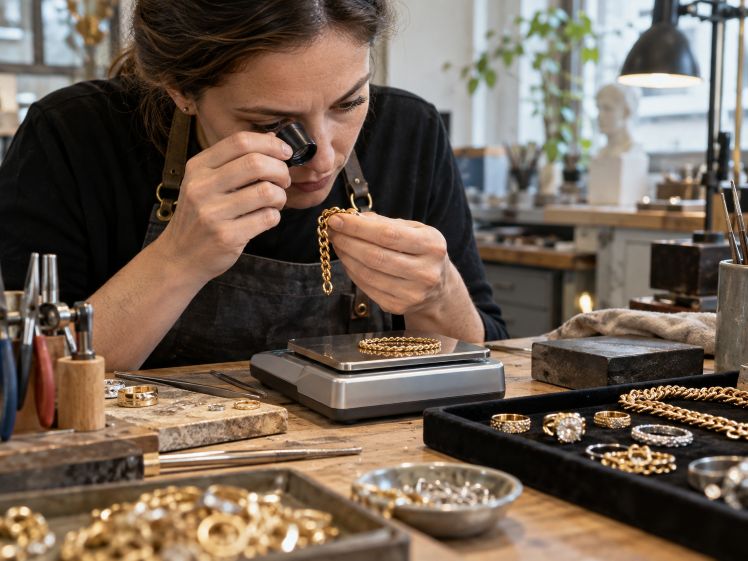
The metal inside a piece of jewelry has a major effect on its price, durability, maintenance needs, and possible resale value. Two pieces can look almost identical at first glance while containing very different amounts of precious metal. That difference can translate into a substantial difference in cost.
Design also plays a role. Large chains, detailed settings, stones, and decorative finishes require materials and labor beyond the basic value of the metal itself. Looking at statement jewelry from Aqua Gold, for example, illustrates how visual impact can depend on both decorative design and the metals used to construct or finish a piece. Understanding those materials gives buyers more useful information than judging jewelry by color alone.
1. Precious Metal Purity Changes the Starting Value
Purity is one of the clearest reasons jewelry metals carry different prices. Sterling silver contains 92.5 percent silver, with the remaining portion made from other metals. The Federal Trade Commission explains that jewelry described as sterling or sterling silver should contain 925 parts silver per thousand.
Gold uses a karat system. Pure gold is 24 karat, while 18K gold contains 18 parts gold and six parts other metals. Fourteen-karat gold contains 14 parts gold and 10 parts other metals. These alloys help make gold more practical for jewelry because pure gold is relatively soft. Federal Trade Commission consumer guidance confirms these proportions and explains why gold is commonly mixed with other metals.
This means two similar-looking gold pieces may have very different intrinsic metal values. A solid 18K item contains considerably more gold than a 14K version of the same weight.
2. More Metal Usually Means More Material Cost
Weight matters because precious metals are commodities sold by weight. A thick bracelet generally requires more silver or gold than a lightweight chain, even when both use the same purity.
The comparison becomes especially important with solid gold. A heavy solid-gold necklace contains precious metal throughout its structure. A plated necklace may contain only a very thin gold layer over another metal.
The Federal Trade Commission distinguishes solid-gold products from plated items and notes that a solid-gold item still needs a karat mark to show its gold content. It also explains that the term “solid gold” refers to construction rather than meaning that the piece is necessarily pure 24K gold.
For buyers comparing similar designs, checking both karat and gram weight provides a clearer picture of how much precious metal they are actually purchasing.
3. What Changes When Gold Is Only on the Surface?
Gold plating makes it possible to create a gold-colored surface without constructing the entire piece from gold. This can greatly reduce material costs.
Plating thickness matters, however. A very thin coating can wear faster as jewelry rubs against skin, clothing, and other surfaces. Federal Trade Commission guidance notes that gold plating eventually wears away and that its durability depends partly on how the piece is worn and how thick the coating is.
Gold vermeil represents another category. Rather than using an ordinary base metal, vermeil uses sterling silver underneath the gold coating. FTC guidance identifies vermeil as a form of gold-plated product with a sterling silver base.
That distinction can affect cost. Gold-plated silver contains precious metal beneath the surface, while a plated base-metal piece may contain far less precious-metal value overall.
4. Manufacturing Adds Value Beyond the Raw Metal
The price of jewelry is rarely equal to the spot value of its metal. Manufacturing adds costs for casting, forming, soldering, polishing, stone setting, plating, quality control, and finishing.
A simple sterling silver band may require relatively few production stages. An elaborate necklace with numerous links, stones, textured surfaces, and plated details requires more work. Even when two pieces use similar amounts of metal, differences in construction can produce very different retail prices.
Plated jewelry also requires additional production steps. Electroplating involves applying a gold layer to another metal through a controlled process. The Federal Trade Commission recognizes different terminology for precious-metal surface applications and stresses that sellers should accurately describe metallic content and coatings.
Design complexity therefore deserves attention alongside metal purity. Buyers are paying for craftsmanship, manufacturing, and finishing as well as raw material.
5. Market Prices Keep the Cost of Precious Metals Moving
Gold and silver prices change in global commodity markets. Factors such as central-bank demand, interest-rate expectations, currency movements, and energy or geopolitical risks can influence gold and silver market prices. When the underlying price of gold rises, producing a piece containing a large amount of gold becomes more expensive. The effect is usually more noticeable with heavy solid-gold pieces than with lightly plated jewelry because the latter contains much less gold.
Silver prices also influence sterling jewelry, although retail prices still include labor, design, distribution, stones, and seller margins. Buyers therefore should not expect the retail price of a finished piece to move exactly in line with the commodity price of silver or gold.
This distinction also matters when thinking about resale. Solid precious-metal jewelry contains measurable gold or silver that may retain material value. Plated jewelry contains substantially less precious metal, so its resale characteristics can be very different even if its original appearance resembles solid gold.
How Do Sterling Silver, Vermeil, Plated Jewelry, and Solid Gold Compare?
- Sterling silver: Contains 92.5 percent silver and is usually less expensive than solid gold.
- Gold-plated jewelry: Uses a gold surface over another metal, reducing the amount of gold required.
- Gold vermeil: Combines a sterling silver base with a gold coating, giving the piece precious-metal content beneath the surface.
- Solid gold: Contains gold throughout the metal structure, with its purity identified through karat markings such as 14K or 18K.
These categories can look similar in product photographs, which is why appearance alone provides limited information about value.
Why Metal Specifications Matter More Than Color
A gold-colored surface does not reveal how much gold a piece contains. Likewise, a heavier or more elaborate design is not automatically made from a more valuable metal.
The Federal Trade Commission advises jewelry shoppers to understand common terms and quality markings because precious-metal content can be difficult to judge visually. Its Jewelry Guides also emphasize accurate descriptions of metallic content, quality, weight, durability, and manufacturing characteristics.
Before comparing prices, buyers can look for the metal type, purity or karat, weight, plating information, and details about the underlying material. These specifications help explain why two visually similar pieces may sit at very different price points.
Jewelry cost is ultimately shaped by several layers of value. Precious-metal purity and weight establish the material foundation. Plating thickness affects construction and expected wear. Manufacturing adds craftsmanship and production costs, while changing commodity prices influence the value of the metals themselves. Looking beyond color and style makes it easier to understand what a jewelry price actually represents.


